

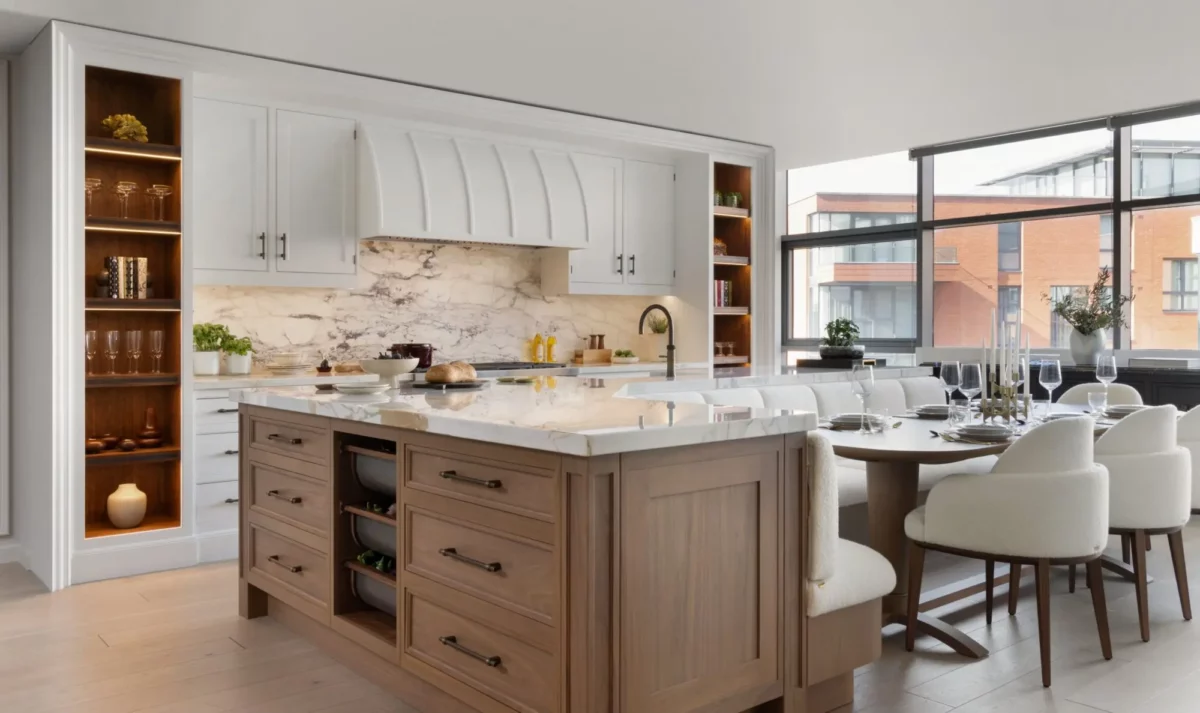
The kitchen has transitioned from an isolated meal-preparation room into the social epicenter of the modern home. As a result, kitchen design trends prioritize a balance between raw utility and interior styling. One of the most significant architectural debates over the past decade centers on the removal of traditional upper cabinets in favor of open shelving.
Replacing solid cabinetry with floating shelves completely alters the visual weight, storage capacity, and maintenance routine of a kitchen. While proponents celebrate the airy, upscale aesthetic of open displays, critics worry about dust accumulation, structural weight restrictions, and the pressure of maintaining a perpetually organized space. Deciding whether to adopt this design trend requires evaluating how you use your space on a daily basis.
The Advantages of Open Shelving
Incorporating open shelving into a kitchen layout introduces several distinct functional and aesthetic benefits that traditional wood cabinetry simply cannot replicate.
Maximizing Spatial Volume and Light Flow
Traditional upper cabinets are bulky, protruding roughly 12 to 14 inches from the wall. In smaller or narrow kitchens, these heavy wooden boxes can trap light and create a claustrophobic environment. Open shelves remove these visual barriers, allowing natural light from windows to bounce across walls unhindered. This lack of bulk immediately makes a compact kitchen feel wider, taller, and much more expansive.
Unparalleled Daily Accessibility
Efficiency is paramount during high-speed meal preparation. Open shelving eliminates the constant opening and closing of cabinet doors. Everyday items like coffee mugs, dinner plates, cereal bowls, and frequently used spices sit directly in view and within arm reach. This setup also simplifies tasks for guests or family members who might not know where specific items are stored, saving you from explaining which cabinet holds the glassware.
A Budget-Friendly Storage Alternative
From a purely financial standpoint, open shelving is significantly less expensive than purchasing and installing high-quality upper cabinetry. Custom or even stock upper cabinets represent a major portion of a kitchen remodel budget. High-quality floating wood or metal shelves require much less raw material and less intricate labor to produce and install, allowing homeowners to redirect financial resources toward premium countertops, appliances, or lower cabinet organization.
Opportunities for Personal Curation
Open shelving blurs the line between functional storage and home decor. It provides a dedicated stage to display heirloom chinaware, unique copper cookware, colorful glassware, or small potted herbs. This allows the kitchen to reflect the homeowner personality, shifting the atmosphere away from a sterile showroom and toward a warm, lived-in space.
The Disadvantages of Open Shelving
Despite its visual appeal, open shelving presents several unique lifestyle challenges and maintenance requirements that can become frustrating if not properly anticipated.
The Problem of Airborne Grease and Dust
The primary complaint regarding open shelves involves cleanliness. Cooking releases vaporized oils, grease, and moisture into the air. Over time, these airborne particles settle onto any exposed horizontal surfaces. When combined with standard household dust, this creates a sticky film that coats both the shelves and the items stored on them. If you do not use every plate and glass on a weekly basis, you will find yourself washing clean dishes before you can use them.
The Pressure of Constant Organization
Traditional cabinets are highly forgiving; you can quickly stack mismatched plastic containers or unorganized coffee mugs behind closed doors, and the kitchen still looks tidy. Open shelving offers no such camouflage. Every item is fully exposed to scrutiny. Maintaining a clean aesthetic requires precise stacking, cohesive color coordination, and the removal of chipped or mismatched dishware. For busy households, this constant need for curation can quickly feel like a stressful chore.
Reduction in Total Storage Capacity
Traditional upper cabinets maximize vertical and horizontal wall space, running all the way to the ceiling and maximizing every cubic inch. Open shelves, by their very design, require breathing room. If you pack an open shelf completely full from end to end, the airy aesthetic is destroyed, and the room looks cluttered. Consequently, kitchens utilizing open shelving lose a significant portion of their total storage volume, forcing lower cabinets and pantries to work much harder.
The Hybrid Approach: Achieving the Best of Both Worlds
If you are torn between the beauty of open shelves and the practicality of traditional cabinets, you do not have to make an all-or-nothing choice. Many interior designers recommend a hybrid kitchen layout that capitalizes on the strengths of both systems.
Strategic Placement Near Key Zones
Instead of removing all upper cabinets, replace a select few in high-visibility, low-grease zones. For example, installing open shelves directly above a coffee station or next to the kitchen sink keeps frequently used mugs and daily glassware accessible. Meanwhile, keep traditional closed cabinetry flanking the range hood, where airborne cooking grease is most concentrated, protecting your less-frequently used baking dishes and dry ingredients behind closed doors.
Utilizing Corner Spaces
Kitchen corners are notoriously difficult to utilize effectively with traditional cabinetry, often resulting in deep, dark spaces where items are lost. Floating L-shaped open shelves wrap around corners seamlessly, transforming a problematic layout area into a bright, decorative focal point that remains completely functional.
Technical and Installation Considerations
If you decide to move forward with open shelving, structural integrity must be prioritized during the installation process to prevent catastrophic shelf failure.
Anchoring Into Structural Wall Studs
A single shelf loaded with ceramic dinner plates, stoneware bowls, and glass pitchers can easily weigh upwards of 50 to 100 pounds. Standard drywall anchors cannot handle this type of load. Installers must locate the wooden or metal wall studs behind the drywall using a stud finder and fasten the shelf brackets directly into those structural members using heavy-duty lag screws.
Material Selection Matters
The choice of material affects both the durability and the maintenance profile of the shelf. Solid hardwoods like white oak, walnut, and maple are excellent choices because they resist sagging under heavy loads. If you choose metal shelving, opt for powder-coated finishes that resist rust and are easy to wipe clean without scratching. Avoid cheap particleboard or thin laminate shelves, which will warp and bow over time when exposed to the high humidity levels inherent to a active kitchen environment.
Frequently Asked Questions
What is the ideal distance between open kitchen shelves?
The standard spacing between open kitchen shelves is 10 to 12 inches. This height easily accommodates standard dinner plates, salad bowls, and drinking glasses. If you plan to store larger items like stand mixers, tall carafes, or oversized cereal boxes on a lower shelf, you should increase that specific gap to 14 or 16 inches while keeping upper shelves at the standard dimension.
How high above the countertop should the first open shelf be installed?
The first open shelf should ideally be positioned 18 to 20 inches above the countertop surface. This height matches the standard clearance for traditional upper cabinets, ensuring you have plenty of vertical room to operate countertop appliances like blenders, coffee makers, and food processors without hitting the shelf above.
Can I convert my existing traditional cabinets into open shelving?
Yes, you can easily convert existing cabinets by carefully removing the cabinet doors, unscrewing the hinges, and filling the remaining screw holes with wood putty. Sand the filled areas smooth and paint or stain the entire cabinet interior to match the exterior frame. This is an excellent, low-cost way to test the open-shelving lifestyle before committing to a full structural demolition.
What types of range hoods work best in a kitchen with open shelves?
High-power under-cabinet or chimney-style range hoods with a high CFM capacity are mandatory for open shelving layouts. The hood must be capable of drawing greasy air and moisture out of the room rapidly before it can drift sideways and settle onto your open shelves. Look for models that extend slightly past the depth of your cooktop for maximum containment.
Will open shelving hurt the resale value of my home?
Open shelving generally does not lower home value, as it is a highly desired feature among modern buyers who appreciate contemporary aesthetics. However, because some buyers value sheer storage volume over design trends, the safest approach for long-term resale value is to maintain a balance of traditional lower cabinets and pantries so the kitchen never feels deficient in storage space.
How do I prevent items on lower open shelves from getting scratched?
To prevent scratches on both your shelves and the bottoms of your dishware, apply discreet felt pads or clear adhesive bumpers to the bases of heavy stoneware items. Alternatively, you can choose shelves with a durable, scratch-resistant matte finish or lay down minimalist washable silicone shelf liners that protect the underlying wood without disrupting the clean visual aesthetic.
How do I handle storage for packaged goods like crackers and cereal with open shelves?
Cardboard grocery packaging can look cluttered on open shelves. The solution is decanting your dry goods into a cohesive set of glass jars, ceramic canisters, or uniform storage bins. This protects your food from air exposure, makes it easy to see when supplies are running low, and transforms messy commercial packaging into an attractive design element.

Comments are closed.