

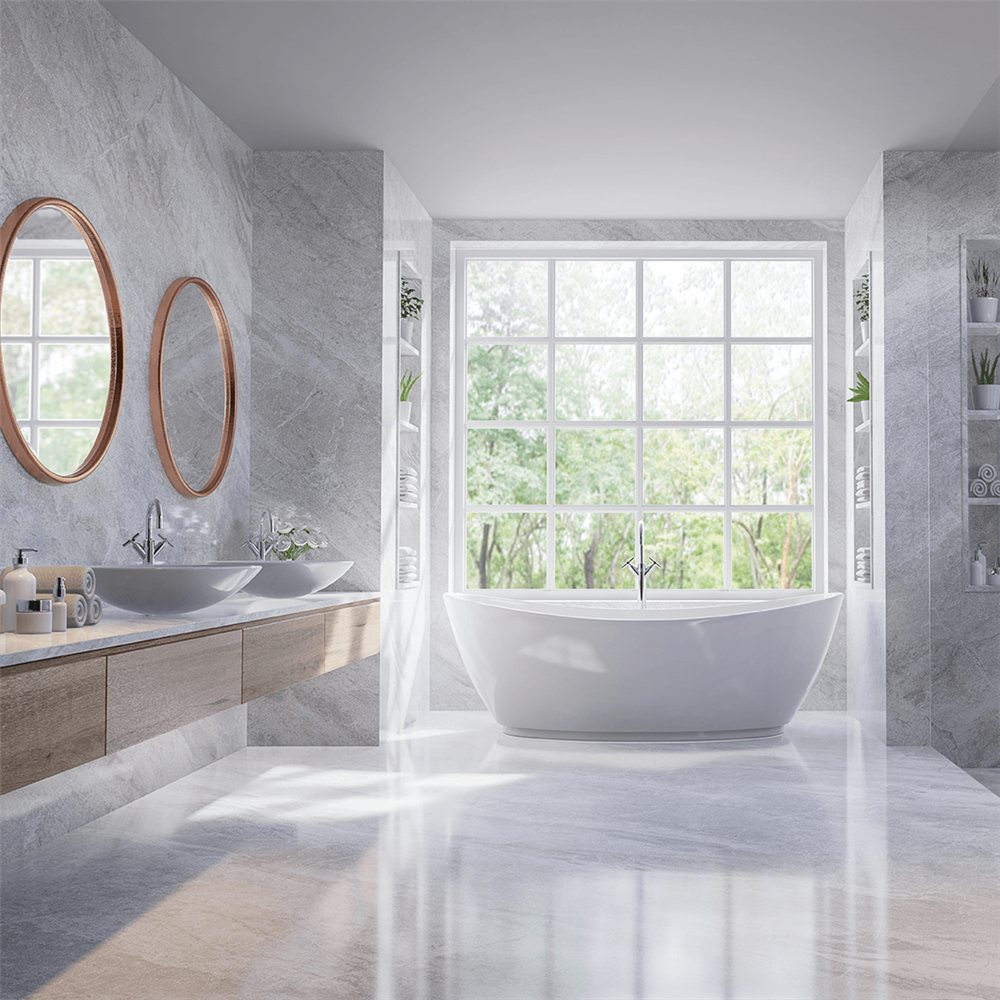
The modern bathroom has evolved far beyond its utilitarian roots. Today, it serves as a personal sanctuary, a functional space for daily routines, and a significant driver of a home overall value. Achieving the perfect balance between aesthetics and utility requires careful planning, a deep understanding of spatial dynamics, and strategic design choices.
Designing a modern bathroom involves navigating the complexities of plumbing constraints, clearance requirements, and lighting placement. Whether working with a compact powder room or a sprawling master suite, this comprehensive guide explores the essential layouts, zoning principles, and design strategies necessary to create a highly functional and visually stunning space.
Core Layout Principles and Spatial Standards
Before selecting tiles or fixtures, the physical dimensions and spatial flow of the room must be established. A well-designed bathroom prioritizes movement, accessibility, and the logical placement of key fixtures. Architects and interior designers rely on specific standard clearances to ensure the space feels comfortable rather than cramped.
The Standard Clearance Guidelines
-
Toilet Clearance: A minimum of 15 inches of clearance is required from the centerline of the toilet to any wall, vanity, or fixture on either side. For optimal comfort, aim for 18 inches. Additionally, there must be at least 21 inches of clear space in front of the toilet bowl.
-
Vanity Clearance: A single sink vanity requires a minimum width of 24 inches, though 30 to 36 inches is preferred for daily use. Double vanities demand at least 60 inches of width to allow two people to use the space simultaneously without interference.
-
Shower and Tub Clearances: A standard shower enclosure should be at least 30 inches by 30 inches, though 36 inches by 36 inches is the modern baseline for comfort. The walkway in front of an entry to a shower or bathtub must be a minimum of 21 inches, though 30 inches allows for much easier movement.
The Concept of Three-Fixture Wet Walls
Plumbing configuration dictates both the construction cost and the ultimate layout of the bathroom. A one-wall layout aligns the sink, toilet, and shower along a single wall. This is the most cost-effective approach because all supply and waste lines are concentrated in one area.
A two-wall layout splits the fixtures across two walls, typically placing the vanity and toilet on one side and the shower or tub on the opposite side. This offers more design flexibility and better spatial flow.
A three-wall layout distributes the vanity, toilet, and shower across three separate walls. While this provides the most spacious and luxurious feel, it requires extensive plumbing infrastructure and is the most expensive layout to execute.
Popular Modern Bathroom Layouts by Size
Every home presents unique architectural constraints. Selecting the right layout depends entirely on the square footage available and the intended primary users of the space.
The Powder Room (Two-Fixture Layout)
Typically measuring between 20 to 30 square feet, the powder room consists of only a toilet and a sink. Because these rooms are designated for guests and brief visits, maximizing floor space is crucial. A wall-mounted toilet with an in-wall tank and a floating pedestal sink can make a compact powder room feel significantly larger by keeping the floor area visible.
The Three-Quarter Bathroom
This layout includes a toilet, a vanity, and a standing shower, omitting the bathtub. Spanning roughly 35 to 50 square feet, the three-quarter bathroom is ideal for guest bedrooms or finished basements. Utilizing a corner shower enclosure with a curved or neo-angle glass door prevents the shower entry from obstructing the main walkway.
The Full Family Bathroom
A standard full bathroom measures approximately 40 to 60 square feet and features a toilet, vanity, and a combined shower and bathtub unit. This is the workhorse layout of the modern home. To optimize efficiency in a family bathroom, consider separating the vanity area from the toilet and tub with a pocket door. This allows one person to brush their teeth while another showers, doubling the utility of the room during morning rushes.
The Primary Master Suite Oasis
Spanning 100 square feet or more, the primary bathroom focuses on luxury and relaxation. These layouts often feature a double vanity, a freestanding soaking tub, a walk-in curbless shower, and a private water closet for the toilet. The design should mimic a high-end spa, creating distinct zones for grooming, bathing, and relaxation.
Key Elements of Modern Bathroom Aesthetics
Modern design relies on clean lines, a restrained color palette, and high-quality materials. It favors minimalism but rejects sterility by incorporating texture and organic elements.
Floating Vanities and Minimalist Storage
Visual clutter is the enemy of modern design. Floating vanities are anchored directly to the wall, leaving the floor beneath them completely clear. This creates an illusion of spaciousness and simplifies floor cleaning. To maintain a clean aesthetic, look for vanities with integrated hardware, soft-close drawers, and deep pull-out organizers that keep toiletries out of sight.
Curbless Walk-In Showers
The transition from the main bathroom floor to the shower should be seamless. Curbless showers eliminate the traditional step-up barrier, using a sloped floor that guides water directly into a linear drain. When paired with a single fixed panel of clear glass, the entire bathroom opens up visually, allowing natural light to flow uninterrupted across the space.
Strategic Lighting Design
A modern bathroom requires a layered lighting scheme to function properly. Relying on a single overhead dome light creates harsh shadows on the face, making grooming difficult.
-
Task Lighting: Install vertical sconces on either side of the mirror at eye level to provide even, shadow-free illumination for shaving or applying makeup.
-
Ambient Lighting: Recessed LED ceiling lights offer overall illumination throughout the room.
-
Accent Lighting: LED strip lights tucked beneath a floating vanity or inside a shower niche provide a soft, low-intensity glow perfect for nighttime use.
Selecting Materials for Longevity and Style
Bathrooms are high-moisture environments subjected to frequent temperature fluctuations. Material selection must prioritize durability and water resistance without sacrificing style.
Large-Format Tiles
Modern design heavily favors large-format porcelain or ceramic tiles, often measuring 12 by 24 inches or even 24 by 48 inches. Larger tiles mean fewer grout lines. This results in a cleaner, less busy appearance and significantly reduces the amount of grout maintenance required. Matte finishes are preferred for flooring to provide slip resistance, while polished surfaces work well on vertical wall installations.
Engineered Quartz Countertops
While marble is undeniable in its beauty, it is highly porous and prone to staining and etching from acidic soaps and cosmetics. Engineered quartz provides the luxurious look of natural stone while offering a non-porous, scratch-resistant surface that never requires sealing.
Frequently Asked Questions
What is the ideal height for a modern bathroom vanity?
The modern standard for vanity height is comfort height, which ranges between 34 and 36 inches from the finished floor. This is taller than the traditional standard of 30 to 32 inches, which was designed for homes with small children. The taller profile reduces the need to bend forward while washing hands or brushing teeth, making it much more ergonomic for adults.
How can I add a bathtub to a small bathroom without overcrowding it?
If you are working with limited square footage but still want a tub, look for a compact freestanding soaking tub. Traditional alcove tubs are fixed, but small freestanding tubs ranging from 48 to 54 inches in length can be placed angled in a corner or directly against a window. This maintains an open floor plan while still offering the luxury of a deep soak.
What is a wet room layout and is it practical for residential homes?
A wet room is a completely open bathroom design where the shower is not separated by a traditional enclosure or tray. The entire room floor is waterproofed, sloped toward a central or linear drain, and typically tiled from floor to ceiling. It is highly practical for small spaces because it eliminates the need for bulky shower doors, and it provides exceptional accessibility for individuals with mobility challenges.
How do I prevent mold and mildew growth in a modern windowless bathroom?
In the absence of a window, a properly sized ventilation fan is mandatory. The fan should be rated for the cubic footage of your bathroom and left running for at least 20 minutes after every shower. Installing a fan switch with a built-in timer or a humidity sensor ensures the fan runs long enough to completely extract moist air, preventing the moisture buildup that leads to mold.
What are the benefits of installing an in-wall toilet tank system?
In-wall toilet systems house the water tank inside the wall framing, exposing only the toilet bowl and the flush plate. This saves up to 8 inches of valuable floor space compared to a standard floor-mounted toilet. Furthermore, because the bowl is suspended off the ground, you can easily clean the floor directly underneath it, eliminating the difficult-to-clean crevices found at the base of traditional toilets.
How can I integrate smart home technology into a modern bathroom layout?
Smart technology can be integrated seamlessly through touchless faucets, digital thermostatic shower valves that save your preferred water temperature, and smart mirrors equipped with Bluetooth speakers and anti-fog heating elements. When planning the layout, ensure your contractor installs electrical outlets inside the vanity drawers or behind the toilet to power these smart features discreetly.
What color palettes work best to make a windowless bathroom feel bright?
To counteract the lack of natural light, stick to a high-reflectance color scheme. Soft whites, warm creams, and pale grays reflect light efficiently, making the room feel larger. Pair these tones with reflective surfaces like polished chrome fixtures, glossy wall tiles, and large, frameless mirrors to maximize the reach of your artificial ambient lighting.

Comments are closed.